Professor Armand D'Angour, an Associate Professor in Classics, has won a Project Award in this year's Vice-Chancellor's Public Engagement with Research Awards, which celebrate public engagement work across the University. The announcement was made at an awards ceremony at the Oxford University Museum of Natural History on 28 June hosted by Vice-Chancellor Professor Louise Richardson. Professor D'Angour's project was recognised in the Communication category of Project Awards - for activities that have informed and inspired the public about research.
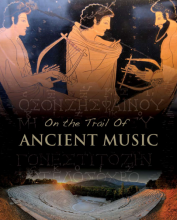
Professor D'Angour's award-winning project Ancient Greek Music: hearing long lost sounds again recreated the scores for two major ancient musical documents, the Orestes chorus and Athenaeus paean, and several minor ones. The project derives from scholarly research that has recreated the sounds of ancient Greek music from notation that has been preserved on stone and papyrus, and by reconstructing ancient instruments from the relics of the originals and illustrations on Greek vases.
The scores were worked on in collaboration with singers and musicians, and performed at events to live audiences in schools, theatres, museums, and online and on national television, including:
- The first public performance of Sappho 'Brothers' poem on BBC TV 4 reaching 217,000 viewers.
- A live performance of the Mesomedes hymns and Seikilos Song in the British Museum to an audience of over 300.
- The first theatre performance of an extended Orestes chorus on stage in Poland.
The project has raised the profile of classics scholarship and demonstrated that ancient music reconstruction is not just feasible, but also musically convincing and illuminating, with the power to engage public audiences. The musicians involved reported that they have derived great benefit from their participation.
The Vice-Chancellor's Public Engagement with Research Awards recognise and reward those at the University who undertake high-quality engagement activities and have contributed to building capacity in this area. Professor Armand D'Angour's award was one of six winners in the Project category of the awards.
Professor Louise Richardson, Vice-Chancellor says: “I have been deeply impressed by the quality of the public engagement with research projects submitted for this year's awards. The breadth and diversity of the activities taking place show how seriously the University takes its commitment to public engagement.”
Professor Alison Woollard, the University's Academic Champion for Public Engagement with Research says: “Public engagement enriches both research and society and the University is committed to enabling our researchers to inspire, consult and collaborate with the public. I'm delighted that we are able to recognise and highlight the fantastic work our researchers are doing and hope these awards encourage more colleagues across the University to carry out their own public engagement with research.”
Funded & supported by: University of Oxford's Public Engagement with Research Seed Fund, Knowledge Exchange Fellowship (torch.ox.ac.uk/Greek-Chorus), Higher Education & Innovation Fund (HEIF) and Jesus College.
About the awards
The Vice-Chancellor's Public Engagement with Research Awards recognise and reward those at the University who undertake high-quality engagement activities and have contributed to building capacity in this area. The awards are awarded in three categories – Early Career Researcher, Building Capacity and Projects. Entrants can be at any level in their career and activities of any scale are welcome.
Winning entries received recognition for their achievements at the Vice-Chancellor's Public Engagement with Research Awards Ceremony that took place on 28 June 2017.
Public Engagement with Research
Humanities & Identities
Recreating the Music of an Ancient Greek Chorus: Euripides' Orestes