

Dr Eleri Anona Watson
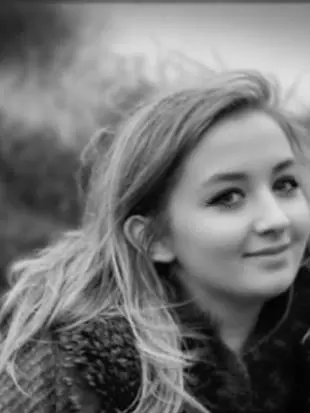
Introduction:
I am a scholar of post-45 Anglo-American literature. My research is interdisciplinary and centres on notions of kinship within feminist, queer, trans, and African-American activism, literature and theory.
I am a Lecturer and Tutor in English Literature (UG/PGT) and Women’s, Gender, and Sexuality Studies (PGT). I also serve as Academic Mentor for the Women’s, Gender, and Sexuality Studies (PGT) MSt. In March 2024, I was named the University’s first Fellow in Queer Studies (Humanities Division).
I have previously held numerous academic roles at Oxford, including Doctoral Tutorial Fellow at Regent’s Park College, Research Fellow at the Rothermere American Institute, Teaching Fellow at the Ashmolean Museum, and Research Assistant to Professor Lloyd Pratt. Internationally, I have served as a Visiting Research Fellow at the University of Southern California and Macquarie University, and Christopher Isherwood Fellow at The Huntington Library.
I am originally from South Wales, where I benefited from a state, Welsh-medium education. After completing my A-Levels, I spent a year studying French at the Université Libre de Bruxelles.
I hold an undergraduate degree in English, French, and History of Art from University College, Durham University. During my undergraduate degree, I also studied for a postgraduate certificate in Literary Translation at the École de Traduction et Interprétation ISTI (Brussels). During this time, I supported migrant communities as a lecturer and trainee counsellor at the feminist education charity, Le Centre Féminin d’Education Permanente (Brussels).
I hold an MSt in Women’s Studies from Wadham College, University of Oxford, where I was a Swansea Foundation and James Pantyfedwen scholar. In 2022, I completed my DPhil in English Literature at The Queen’s College, University of Oxford.
Research:
My doctoral thesis examined the nature and (im)possibilities of queer kinship. Looking to canonical works of queer theory, I argued that queerness cannot be untethered from an ethics of experimental kinship. This implicates the pursuit of new, ever-changing and expanding kinship possibilities by crossing, querying and playfully deconstructing hetero-capitalism’s dividing lines of class, race, and sexuality. By continually changing/supplementing/questioning the borders of ‘identity’, queer kinship deconstructs the notion of unified identity (identity politics) for an identification politics of being-together in difference.
For many queer theorists, this vision of queerness is tied to Michel Foucault’s quasi-manifesto for a gay ‘way of life’. The ‘crossing points’ of Foucault's ‘gay’ way of life’ might, at first glance, echo queer’s relational politic, And indeed, these theorists have recast Foucault’s gay as a queer ‘way of life’. However, I contended that this conflation is a misnomer, overlooking contradictions and exclusions of Foucault’s quasi-manifesto. Wilfully delimiting relational choices and rejecting even the possibility of deconstructing binaries of male/non-male identity, Foucault’s gay ‘way of life’ is, I argued resolutely ‘un-queer’.
While foundational notions of queer/queering establish deconstructive relationality as their basis, Anglo-American feminists and queer theorists have declined to acknowledge or engage with queer theory’s basis in the deconstructive thought of Jacques Derrida and Hélène Cixous. Through a radical queer reading of Derrida and Cixous’ forty-year-long intertextual dialogues regarding the nature, (im)possibilities of, and strategies for sustaining their own loving friendship [aimance], I interrogated this refusal. Countering narratives of domination/absorption that characterise friendship in the Western philosophical tradition, aimance implicates a deconstructive ethics involving: a wilfulness to continually welcome the other (hospitable approach) and identify with/against the other (voler/différance)—deconstructing one’s own ‘identity’—all the while respecting and sustaining the otherness/unknowability of the other. Aimance, I argued, articulated an ethics of queer kinning, while their dialogues offer a playbook for queer scholars and activists in how to allow for and sustain queer kinship.
In addition, I offered a radical re-interpretation of the ‘approach-as-event’ that overturned criticisms of deconstruction’s untethering of theory from context. This understanding of aimance’s possibility as context-dependent facilitated my examination of the (im)possibility of queer kinship in the post-war writing of Christopher Isherwood and his contemporaries Tennessee Williams and Gore Vidal.
I focused on Isherwood’s depiction of cross-identitarian ‘fag-hag’ friendships. While these offered potential sites for queer kinship, I contended that in the face of Cold War hetero-capitalism and the emergence of ‘identity politics’, such writers collaborated to produce a homosexual identity politics that was fundamentally incompatible with the possibility of the loving, cross-identification that characterises queer kinship. For such authors, a queerly loving kinship between ‘fag’ and ‘fag hag’ thus appears impossible.
My current research builds on the critical insights of my doctoral thesis. I am currently preparing two projects:
'Deconstruction Today: Transatlantic Dialogues for Liveability in Crisis' comparatively examines the rising animosity towards deconstruction in France, the UK, and the US—both as a product of nationalist, anti-gender politics and as a point of rupture within Queer, Trans, and Black Studies. I ask what is lost—conceptually, politically, and ethically—when deconstruction, notably its relational ethics, is abandoned just as its challenge to the enemies of queer, trans, and Black liveability is most clearly confirmed. The project reopens conversations long deemed impossible between deconstruction and Queer, Trans, and Black thought—traditions that have often rejected deconstruction as abstract, Eurocentric, politically quietist, or simply irrelevant. Drawing on Derrida and Hélène Cixous’ writings on relationality and love, I stage these dialogues in strategic adjacency, showing how their frictions generate shared tactics for liveability and resistance. In doing so, I argue that deconstruction is not over but urgently unfinished: a practice of relation continually reinterpreted and poised to respond to today's crises.
'Between Men: Isherwood, his tribe, and their women’ traces the development of Isherwood’s misogynistic gay politic and its primary expression in the gross figuration of the ‘fag-hag’. This study examines how this politic of gay identity—also prevalent in the work of Isherwood’s ‘tribe’— was shaped by the circulation and editing of manuscripts among figures such as Tennessee Williams, Gore Vidal, and Edward Upward.
Publications and Presentations:
I have published on topics relating to deconstructionist, queer, trans, Black and feminist thought, literature, art, and film 1900-present. My recent publications can be found in Exchanges (2015), Katherine Mansfield and Bliss and Other Stories (2020), The Journal of Modern and Contemporary France (2022), U.S. Studies Online (2024), and The Edinburgh Companion to Queer Reading (2024). I am currently editing a special issue on the Anglo-American reception and legacy of Hélène Cixous for Angelaki.
I have presented my research at major conferences in Europe and the US. I have also served as a keynote and invited speaker at institutions including the University of Cambridge, the University of Southern California, Maquarie University, and Charleston.
I welcome academic outreach opportunities. I have discussed my research interests, writing, and activism in articles for El País and The Guardian, as well as on BBC News and BBC Radio 4's Today programme. My research has also contributed to exhibitions (Christopher Isherwood at Corpus Christi, University of Cambridge (2024)) and theatrical projects (Mia Hull, Christopher and the Grave-Diggers (2024)).
I have served as a peer reviewer for numerous journals and presses, including Routledge, Vernon Press, Studia Anglica Posnaniensia, Oxford Research in English, and Culture as Text. I welcome invitations to review articles and manuscripts relevant to my research interests.
Selected Grants, Awards and Honours:
2025:
- Visiting Research Fellowship. Macquarie University.
2024:
- Derrida Today Scholar, Derrida Today, Edinburgh University Press.
2020-22:
- Christopher Isherwood Fellowship. The Christopher Isherwood Foundation.
2019:
- Postgraduate Award. The Queen’s College, University of Oxford.
- Baillie Gifford Writing Scholarship. University of Oxford
2018:
- Global Dome Scholarship. University of Notre Dame.
2016:
- Visiting Research Fellowship. University of Southern California.
- Santander Scholarship. University of Oxford.
2015:
- Wadham College Postgraduate Scholarship. Wadham College, University of Oxford.
- Women in the Humanities Award. TORCH, University of Oxford.
2014:
- Postgraduate Scholarship. The James Pantyfedwen Foundation.
- Postgraduate Scholarship. The Swansea Foundation.
- Urdd Athroniaeth Graddedigion Prifysgol Cymru Scholarship. Cardiff University.
2013:
- Vice-Chancellor's Scholarship, University of Durham.