Discussion Group | The British Reception of Bronislava Nijinska's Les Noces and the General Strike (June 2022)
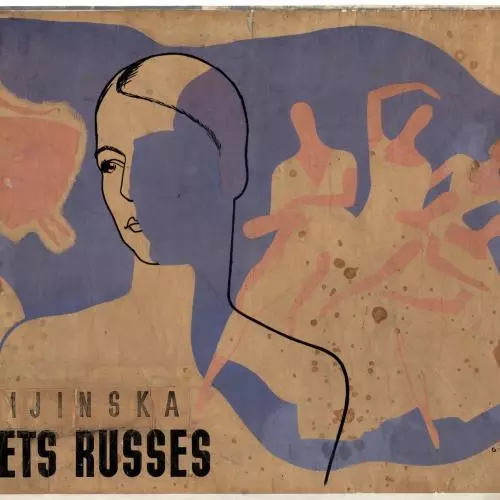
Group held to discuss the British reception of Bronislava Nijinska's Les Noces, a ballet choreographed for Serge Diaghilev's Ballets Russes in 1923 that offered music by Igor Stravinsky and costumes by Natalia Goncharova.
Day of Dance: Transnational Conversations (June 2022)
An all-day symposium was held which included live dance, scholarship, and discussion of what constitutes dance "avant-garde(s)" across nations in the 20th-21st centuries.
Keynote Speakers and Artists included:
Alexander Whitley and Dancers
Lynn Garafola (Columbia U)
Judith Mackrell
Jane Pritchard (V&A)
Liam Francis
Book launch: La Nijinska: Choreographer of the Modern (Oxford University Press) by Lynn Garafola (June 2022)
A celebration was held of the publication of : La Nijinska: Choreographer of the Modern (Oxford University Press) by Lynn Garafola. Lynn was in conversation with the dance critic Judith Mackrell.
Discussion Group | The British Left and Anti-Imperialism: Networks of Empire, Networks of Resistance (November 2022)
The discussion focused on imperialism and anti-imperialism. The starting point was the trial in Meerut, India, of thirty-four trade union leaders in March 1929 which revealed the existence of an extensive Communist anti-imperialist labour network within British India connected to Communist groups across Europe and became a significant point of domestic agitation among British Communists. The discussion explored the nature of this network and anti-imperialist networks more generally.
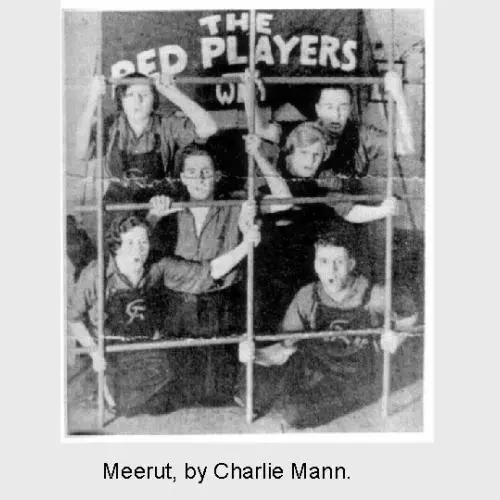
Meerut (1931): Anti-imperialism, Agitprop, and the Workers' Theatre Movement (November 2022)
A workshop-performance was held of Meerut (1931), one of the most important of the Workers' Theatre Movement's early agit-prop sketches on the trial and imprisonment of a group of trade union leaders in India. Followed by a discussion of the play's context, led by Nicholas Owen, Associate Professor of Politics.
Discussion Group | Democracy, Self-Determination and Workers' Control (February 2023)
The discussion focused on the relationship between Britain and the Soviet Union through the lens of politics and political thought.
British Socialism and the Soviet Union: Talk by Professor Kevin Morgan (February 2023)
Discussion of British socialism's response to the Soviet Union which included a guest lecture and a roundtable conversation.
Lecture: Professor Kevin Morgan (University of Manchester), author of Bolshevism and the British Left (2006-2013) and studies of Harry Pollitt (1993), Ramsay MacDonald (2006), and A. A. Purcell (2013), and an editor of Twentieth Century Communism: A Journal of International History.
The roundtable conversation focused on researching British socialism through early twentieth-century periodicals and newspapers and the prospects for future digitisation.
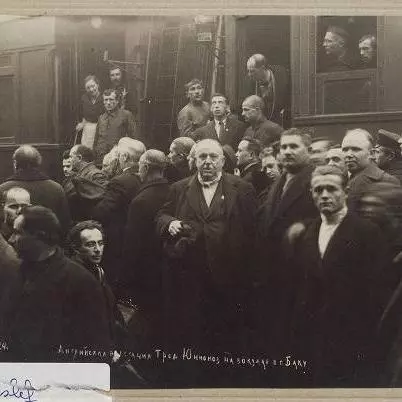
Discussion group | Russian Theatre in Britain, 1926: Komisarjevsky's Chekhov season and Huntly Carter's ‘Labour theatre' (May 2023)
The discussion focused on Russian theatre in Britain in the 1920s, returning to 1926, the year of the General Strike, to see two very different versions of Russian theatre being presented. In west London, Theodore Komisarjevsky continued his series of much-admired Chekhov productions for the Barnes Theatre. In north London the journalist Huntly Carter presented lantern lectures on Soviet acting techniques to local branches of the Independent Labour Party.
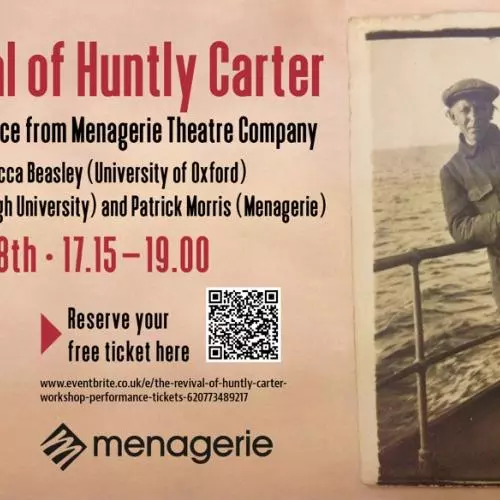
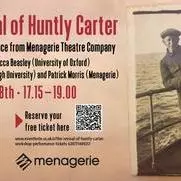
The Revival of Huntly Carter: Workshop Performance (June 2023)
A workshop performance was held which was a collaboration between Professor Rebecca Beasley (Faculty of English, University of Oxford) and Patrick Morris (Theatre Director and Writer, Menagerie Theatre Company). Followed by a response from Professor Claire Warden (Loughborough University) and a Q&A with the creators and cast.
Discussion Group | Alan Bush, the Soviet Union and Music in Britain in the 1936 (November 2023)
The discussion focused on Soviet influences on music in Britain in the 1930s, in particular on the composer and communist Alan Bush (1900-1995), his work with choirs and working-class organisations.
The group examined two documents from 1936:
-
a review of a concert performance of Shostakovich's opera Lady Macbeth of the Mtsensk District which took place on 18 March 1936 at the Queen's Hall, London;
-
an unpublished article by Alan Bush outlining his aesthetics and practice of workers' music.
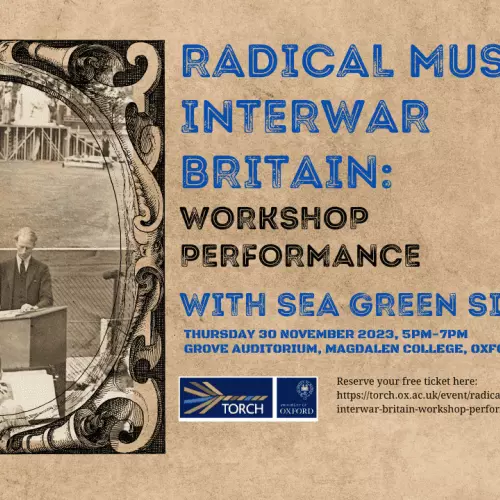
Radical Music in Interwar Britain: Workshop Performance (November 2023)
A workshop of radical music in 1930s Britain, the product of a collaboration between Dr Joanna Bullivant (Magdalen College, Oxford) and the Sea Green Singers of Oxford, conducted by Sarah Westcott. The event included a talk and performances of songs informed by contemporary experimental ideas about performance style and radicalising the concert.
Discussion Group | Soviet Film and British Documentary Film (February 2024)
The discussion focused on the impact of Soviet film in Britain, particularly in relation to the British documentary film movement with materials that provided background to the term's final event, a screening of two films: Sergei Eisensteins's Battleship Potemkin and John Grierson's Drifters.
Battleship Potemkin and Drifters: A Celebration of the Historic 1929 Screening (February 2024)
Final Event: A recreation of one of the most important events in the history of British film: the Film Society's screening of Eisenstein's Battleship Potemkin and John Grierson's Drifters on 10 November 1929, introduced by Professor Emma Widdis (University of Cambridge) and Professor Jo Fox (School of Advanced Study, University of London), an expert in Eisenstein's and Grierson's work.